Moving Made Simple PCB
When searching for Panama City Beach movers who understand Gulf microclimates, tides, and HOA regulations. Check for proper documentation including a Florida IM, USDOT/MC, $1-$2M General Liability, $1M auto insurance, workers' compensation, and COIs naming your condo. Request binding, itemized estimates, rust-proof packaging, climate-controlled storage, and facility access scheduling 7-14 days before moving. Expect higher rates during peak dates; long carries, stairs, and limited access typically add 15-30% to labor fees. Be wary of unrealistic estimates and excessive down payments. Request recent PCB testimonials and hurricane preparedness plans-follow these guidelines to choose wisely.
Critical Insights
- Seaside property experts handle coastal conditions, climate variations, and association rules to avoid delays, fines, and salt-air damage.
- Comprehensive moving services offering local and long-distance relocations, high-rise residential moving, commercial office transfers, expert packing services, and secure climate-controlled storage options.
- Confirmed compliance status: Florida Intrastate Mover, USDOT/MC credentials, $1-$2M in liability protection, workers' compensation, COIs with additional insured and waiver of subrogation.
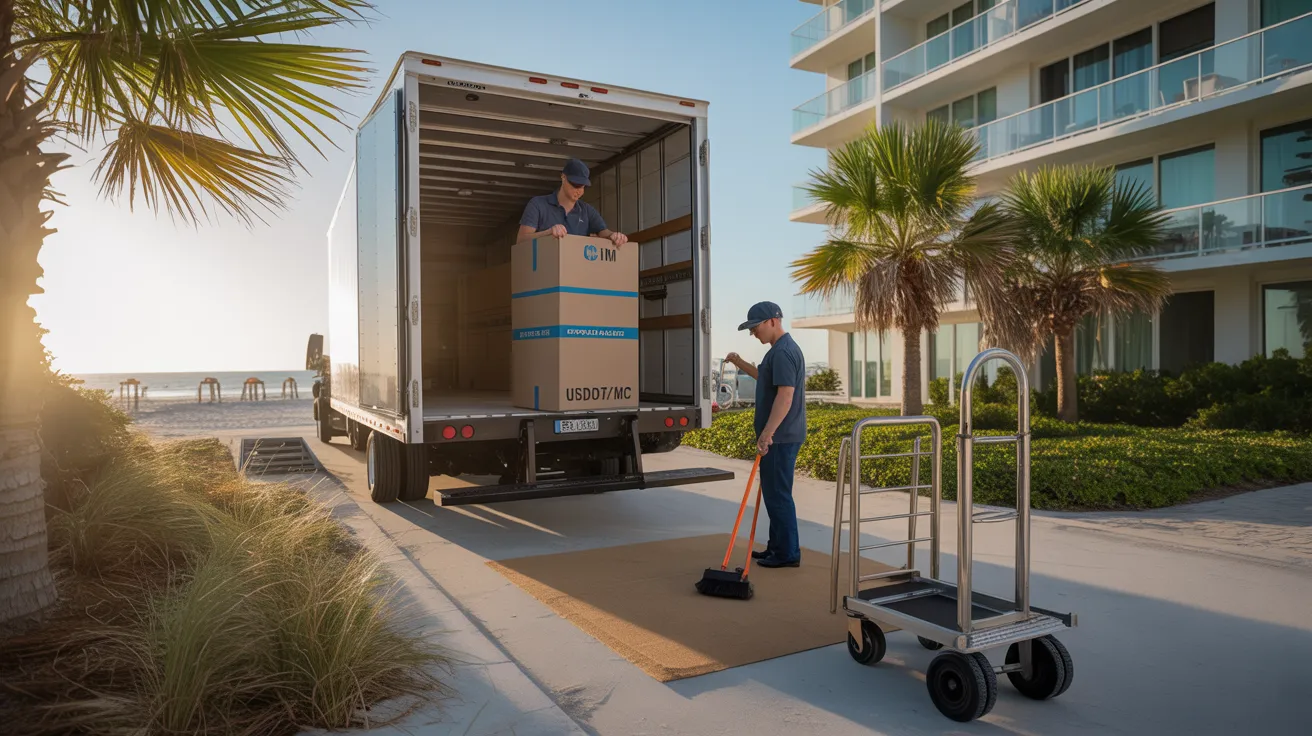
- Premium equipment and professional methods include: freight elevator bookings, rust-resistant packing materials, mechanical stair-climbers, hydraulic liftgates, comprehensive floor protection, and proper sand cleanup.
- Clear and upfront pricing and scheduling: including mid-week and mid-month slots, holiday period arrangements, transparent fuel and toll charges, and streamlined communication with one main contact person.
Understanding Why Local Experience is Essential for the Gulf Coast
Because the Gulf Coast adheres to its own rules, local expertise cuts risk and costs. You deal with microclimates, sudden squalls, and salt-air corrosion that impact poorly timed moves. Teams who observe local weather windows reduce delays by hours and damage by double digits. They comprehend tidal cycles, bridge restrictions, and seasonal traffic patterns along US-98, optimizing loading and route choices.
Professionals must manage coastal regulations that vary between local jurisdictions and beach zones. Experienced contractors expedite permit processes, align with property management standards, and comply with dune and seawall access restrictions, eliminating penalties and corrections. They implement corrosion-resistant packaging and local material positioning to minimize exposure. The end result: reduced incidents, tighter schedules, and consistent financial planning-based on data, not assumptions-delivering on time with assets intact.
Professional Services from Trusted PCB Movers
Count on PCB movers to provide end-to-end, Gulf-ready services: residential relocations both local and interstate, high-rise and condo specialized moving, business and workplace moves, climate-controlled short- and long-term storage, and premium packing services using rust-proof materials. You'll have crews trained for beachside access, restricted elevator access, HOA rules, and weather-related contingency plans. With local knowledge, teams sequence loads around tide schedules and bridge congestion to minimize dwell time.
They deploy specialty tools-such as stair-climbing dollies, liftgate trucks, panel carts, server crates, and anti-humidity wrapping-to safeguard assets and speed up turnarounds. Their offerings include assembly and disassembly of furniture, technology disconnection and setup, equipment installation, waste disposal, and readiness inspection. Visual tracking and asset tracking improve tracking precision. Adaptable timing offers evening and weekend operations to reduce disruption. You can expect accurate scheduling, clear project parameters, and performance-based metrics.
How to Check Licenses, Insurance, and Reviews
Prior to booking a moving company, you should check their regulatory standing and financial responsibility. Start by checking their credentials: verify a valid Florida IM number and, when moving between states, a valid USDOT and MC authority. Examine insurance certificates directly from the check here insurance provider - covering general liability, cargo coverage, and workers' compensation. Ask for insurance limits in dollars and coverage exclusions in writing.
Evaluate service provider certifications and associations (such as ATA, ProMover), which signal compliance audits and consumer protection standards. Examine the claims process: obtain the written timeline, paperwork needs, and average resolution rates. Review grievance records on FMCSA, Florida DBPR, and BBB; select companies with low complaint ratios and high on-time performance.
Verify reviews through pattern analysis - looking for recent reviews, regional specifics, and balanced opinions. Contact past customers to validate damage rates and dispute resolutions.
Understanding Your Quote and Price Factors
Your base rate will be calculated from team requirements, duration, transportation costs, and essential supplies. Expect higher rates with long-distance carries, stairways or elevator wait times, oversized items, elevated floor destinations, tight parking situations, seasonal peaks, or weekend bookings. Request a detailed breakdown to assess costs between different moving services accurately.
Core Rate Elements
While each relocation is different, your basic rate typically depends on a few core elements: number of movers and their rates, truck dimensions and fleet needs, estimated duration (plus transit time), and journey fees (gas, road fees, parking costs). You'll find a minimum charge that accounts for deployment, first work segment, and essential tools. After that, rates adjust according to the number of movers (such as two or three movers), the necessary vehicle capacity, and estimated on-site and travel time.
A transparent fuel surcharge will be applied based on route distance and current diesel rates. Time is charged as work time including load-out, transportation, and delivery. Parking and toll expenses are passed through directly. Obtain a written rate sheet outlining pricing structure, vehicle assignment, travel guidelines, and fuel surcharge methodology.
Factors Raising Costs
Once the base rate components are established, your price rises when circumstances influence work time, truck space, or transit expenses. Elements including stairs, long-distance moves (over 75-100 feet), and elevators can contribute 15-30% in labor. Oversized objects like safes, pianos, and hot tubs need additional manpower or tools, adding to the duration. Restricted vehicle entry or several loads increases truck duration and fuel expenses. Peak periods (weekends, month-end, and holidays) include 10-25% premium charges.
Travel distance affects transportation duration, overtime charges, and fuel expenses. Inter-city moves frequently demand city permits for curb access; Fee structures differ between municipalities. Packing services, specialized crating, and supplies are charged per item. Insurance upgrades with Full Value Protection increase rates based on declared value. Weather-related delays, schedule changes, and last-minute adjustments can increase final costs.
Project Timing and Seasonal Planning
Because timing influences cost and availability in Panama City Beach, coordinate your move with clear windows and local demand cycles. High season hits from March to August, aligning with spring break and summer rentals. You can expect restricted scheduling options and rates 10-25% higher. Utilize off-season timing-September until early December and mid-January through February-to obtain lower rates and flexible scheduling options.
Plan local moves 4-8 weeks beforehand, and schedule interstate moves 8-12 weeks out. Try to secure mid-week and mid-month dates, as the first and last weekends are usually booked first. Consider holiday scheduling challenges: Presidents' Day, Memorial Day, July 4th, Labor Day, Thanksgiving, and Christmas increase moving volume and affect road accessibility.
Confirm loading/unloading schedules, elevator reservations, parking passes, and homeowner association guidelines seven days in advance. Keep a 24 to 48 hour window for weather-related issues or building schedule adjustments.
Packing, Protection, and Climate-Smart Materials
Within a beach location like Panama City Beach, effective packing hinges on moisture control, impact protection, and heat tolerance. You'll protect wood, leather, and electronics by opting for moisture resistant packaging, vapor barriers, and desiccant packs rated to 40-60% RH. Use double-wall cartons for heavy items; lab tests indicate they resist crushing by 30-40% more than single-wall boxes. Protect breakables with foam-on-roll and bubble of at least 3/16-inch cells to absorb shocks. For furniture and instruments, climate controlled padding minimizes thermal swings that cause warping and finish cracks. Secure boxes with water-activated tape; it adheres 2-3x stronger than acrylic tape. Tag "top-load only" for fragile bins. Finally, avoid attic-hot trucks; arrange transport early morning to reduce heat exposure.
Multi-Unit Building and Association Management
You must lock in loading dock and elevator access to ensure smooth operations and prevent building fines-most buildings require 2-4 hour windows reserved 3-7 days before the move. Confirm insurance and access compliance early: COI with additional insureds, waiver of subrogation, and coverage limits (often $1-2M) are mandatory. We coordinate all authorizations, reserve moving pads and doorway protection, and supply time-stamped certificates to comply with building rules.
Scheduling for Elevators and Docks
Whether you're moving into high-rise condos on Front Beach Road or HOA-controlled buildings on Thomas Drive, coordinating elevator and dock access is essential for a successful move. You'll need confirmed service windows, confirmed in documentation, typically spanning 2-4 hours per load-out/load-in. Schedule 7-14 days beforehand during high-traffic times. Confirm elevator measurements, weight capacities, and dock specifications; incompatibilities may cause 30-90 minute delays each trip. Try to secure an exclusive freight elevator-dedicated freight access cuts operation time by 20-35% compared to shared elevators.
Align truck scheduling with elevator operations: one team loading, one team operating the elevator, one team receiving. Schedule arrivals at different times to avoid congestion at the dock and avoid HOA penalties. Submit vehicle registration numbers, team sizes, and time frames to supervisors. Verify alternative scheduling for inclement weather and traffic situations on US-98.
Access and Insurance Requirements
Reserving elevator and loading dock access is only part of the process; buildings on Front Beach and Thomas Drive require strict insurance and compliance documentation before releasing entry permissions. Insurance documentation must meet exact specifications, comprising listing the condo association as certificate holder, verified moving company insurance, and additional insured endorsements. Most properties mandate $1-$2M in general liability coverage, $1M automotive liability, workers' comp insurance, and insurance transfer waiver. Send insurance paperwork 72 hours prior to moving day and get documented authorization.
Comply with access regulations: confirmed COI, signed move guidelines, floor protection, and scheduled time windows (generally 9 a.m.-3 p.m.). Numerous towers mandate vendor badges and background checks. Missing any document leads to security denial of entry. We handle COIs, submit to platforms, and secure approvals to ensure your crew begins on time.
Seaside Navigation: Essential Tips for Parking, Elevators, and Beach Access
Get ahead by securing access details in advance: confirm HOA rules, loading areas, elevator reservations, ceiling limits, and available hours a minimum of 7-14 days before move day. Get information on dock dimensions and weight limits; many beachfront garages limit clearance to 7-8 feet, and some elevators prohibit moving equipment during busy periods. Secure opening or end-of-day slots to avoid congestion.
Review and plan for beach access limitations. For dune or public path crossings, check permit regulations and delivery windows. Check tide timing; low tide conditions shorten carrying paths and reduce risk exposure. Position runners and door frame protection to avoid penalties. Assign one person for loading and another for traffic control to enhance efficiency and avoid citations. Finish with complete sand management: deploy floor mats, boot-cleaning stations, and HEPA vacuums to safeguard finishes and deposits.
Key Warning Signs and Questions When Hiring Movers
Although beach moves add complexity, the greatest dangers often come from the mover you choose: be cautious of vague, below-market quotes (20-40% under market rates), large initial deposits (exceeding 10-15%), absence of DOT/MC numbers, or missing COI listing your HOA. Obtain comprehensive written estimates broken down by labor, supplies, transportation, fuel charges, and access surcharges to prevent unexpected costs. Check coverage amounts and claim settlement periods.
Research operations: What are their standards regarding client updates (from quote to delivery updates, dedicated point of contact, 24/7 dispatcher availability). Check staff verification procedures, machinery age and upkeep, and storm contingency measures. Obtain references highlighting latest Panama City Beach work.
Get clarity on logistics requirements including elevator reservation procedures, parking authorization requirements, stair carry specifications, and long-distance transport limits. Make sure to inquire about animal guidelines (door management protocols, noise-related considerations) and non-standard hours and weekend costs. Always secure a documented COI that names your HOA.
FAQ Section
Can Moving Companies Offer Temporary Storage During Closing Delays or Home Renovations?
Yes. The majority of movers offer short-term storage options for closing delays or renovation storage needs. You can book short-duration storage by the day, week, or month, often in secure, temperature-regulated warehouses with inventory tracking. Anticipate clear pricing per vault or square foot, plus access fees. Request information on insurance coverage, minimum terms, and delivery timelines to ensure seamless item transition when your property becomes available. Reserve early in busy moving periods to guarantee availability and pricing.
Is it Safe to Trust Movers with Boats, Jet Skis, and Beach Equipment?
Absolutely, professional movers can transport boats, jet skis, and beach gear securely. Imagine your hull secure on a trailer, straps crossed, and a padded cradle absorbing road vibration. Select Marine transportation with approved trailers, front/back securing points, and DOT-compliant escorts for oversized loads. For Jet ski hauling, look for PWC bunks, winch locks, and moisture barriers. Obtain weight certifications, cargo insurance, and condition reports. Statistics indicate proper rigging reduces transit damage rates by over 60%.
Are There Eco-Friendly Move Options or Reusable Packing Crates?
There are many eco-friendly choices for your packing requirements. Choose reusable crates and green packing materials consisting of recycled cardboard, paper, and biodegradable wrap. Consider renting reusable crates that decrease single-use waste by up to 80% and cut packing time by 30-40%. Request hybrid trucks, consolidated shipments, and digital inventories to decrease emissions. Request mattress bags and wardrobe boxes you can return. Make sure to verify suppliers' certifications (FSC, SFI) and look into a take-back program to ensure true circularity.
What Accommodations Are Available for Seniors or Disability Moves?
Dedicated moving solutions optimize senior and disability-related transitions. Picture this: full-service support from start to finish with healthcare transportation arrangements, strategically designed accessible paths, and step-free loading options. Experienced crews provide ADA-compliant equipment including custom loading ramps, trucks with accessibility features, and comprehensive furniture handling. The team sets up security measures like grab bars, organize medications, and implement fall prevention measures. Pre-move assessments identify accessibility needs, while round-the-clock dispatch tracks every step. Research indicates reduced accident rates and reduced moving duration when using specially trained teams, detailed protocols, and mobility-assist devices.
Do Professional Movers Handle Last-Minute Moves or Same-Week Emergencies?
Indeed - the majority of movers handle emergency and same-week relocations. You'll generally get emergency scheduling with compressed timelines, dedicated teams, and expedited packing to maintain your schedule. Count on triage-style inventory, limited delays, and clear deadline limits for immediate or following-day service. You'll incur expedited fees, but you'll get assured scheduling, personal move managers, and live monitoring. Reserve early-week slots when there's more flexibility, and prep essentials to expedite packing and lower additional costs.
Conclusion
You've reviewed the navigation tools. Now pick movers who know PCB's specific requirements: certifications, liability coverage, building access, HOA regulations, weather considerations, and actual expenses per hour, truck, and crew. Confirm DOT/FDACS documentation, coverage limits, and claim history; scan reviews for trends, not anecdotes. Ask about stair fees, extended transport charges, and premium period pricing. Require weather-appropriate packing for salt, sand, and humidity. Book early, secure written confirmation, and avoid the temptation of too‑low quotes. Be prepared.